

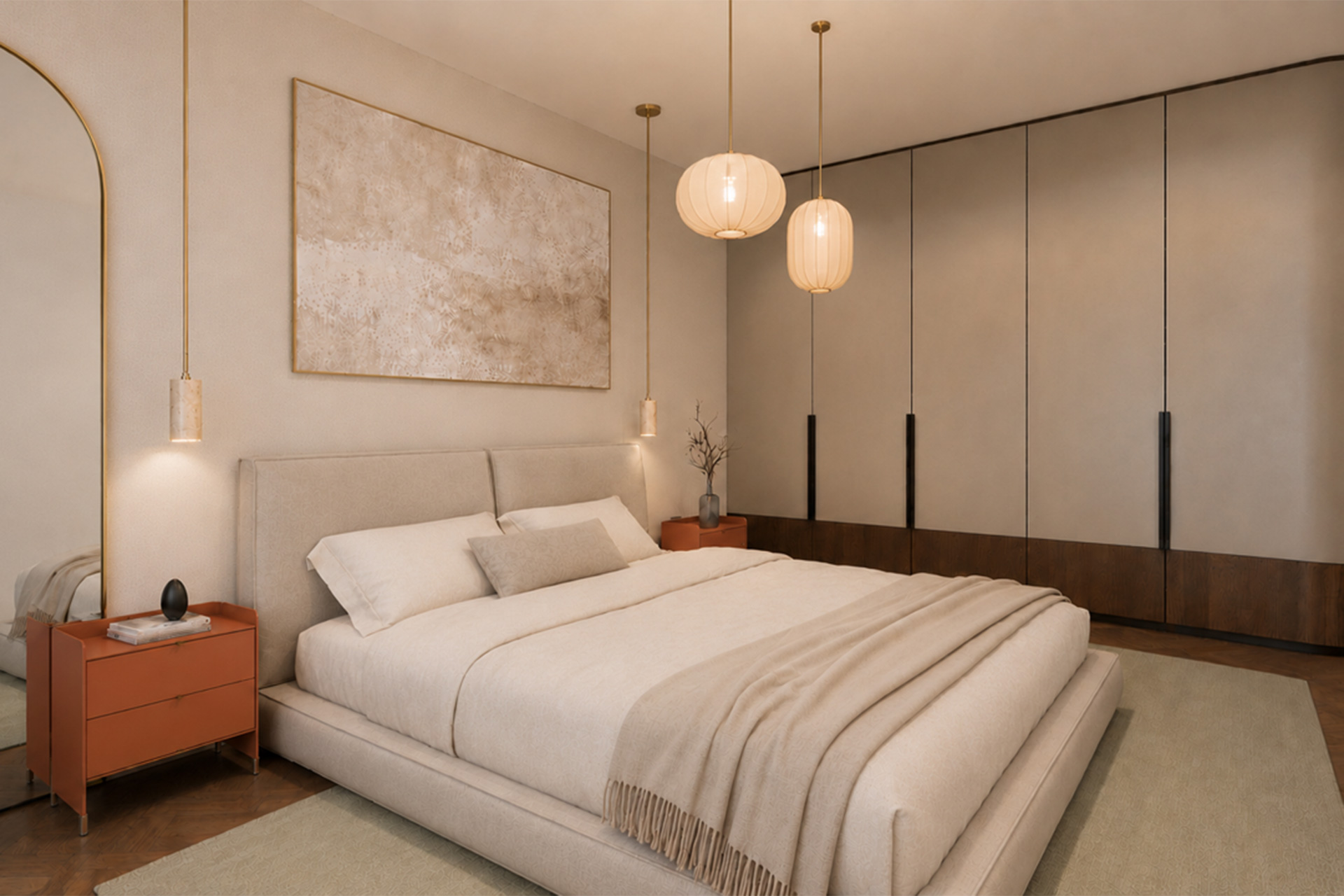
Residential quality is no longer measured only by how a home looks, but by how it supports everyday life.
For years, residential quality was measured through square metres, finishes, views, and location. These were the shorthand signals buyers, owners, and developers trusted; the language the market understood.
That language is changing.
Across private residences, high-end apartments, and bespoke residential commissions, a different question is now shaping decisions: not only what does this space look like, but what does it feel like to live in it, every day?
From Amenity to Standard
Wellbeing has moved from amenity to standard. Not as a wellness room added to a floor plan, or a curated material palette selected for visual effect, but as the organising principle behind every design decision. Light quality. Acoustic comfort. Material honesty. Privacy. Flow. The balance between retreat and shared life. These are no longer finishing touches. They are the brief.
This shift is not sentimental. It reflects how people now understand the role of the home. A residence is no longer simply an asset, an address, or a visual expression of taste. It is the primary environment in which life is managed, relationships are sustained, energy is restored, and identity is quietly reinforced.
The design of that environment carries real consequences.
The measure of a home is not what it communicates on first impression, but what it gives back across years of ordinary life.
Design for Ordinary Life
For residential design, the implications are significant. Spaces that merely look considered are increasingly being distinguished from spaces that genuinely function with consideration. Clients who once prioritised visual statement are now asking more specific questions: How will this room feel on an ordinary Tuesday? What does the morning light do in this kitchen? Can this bedroom truly support rest? Is this a space I will want to return to?
These are simple questions, but they require a more intelligent starting point.
Design that begins with the life being lived, rather than the image being projected, produces different outcomes. Materials are chosen for how they age, not only how they photograph. Proportions are calibrated for daily movement, not only for the wide-angle render. Lighting is designed for mood and function across the full arc of a day. Storage, circulation, texture, silence, and touch become part of the value of the residence.
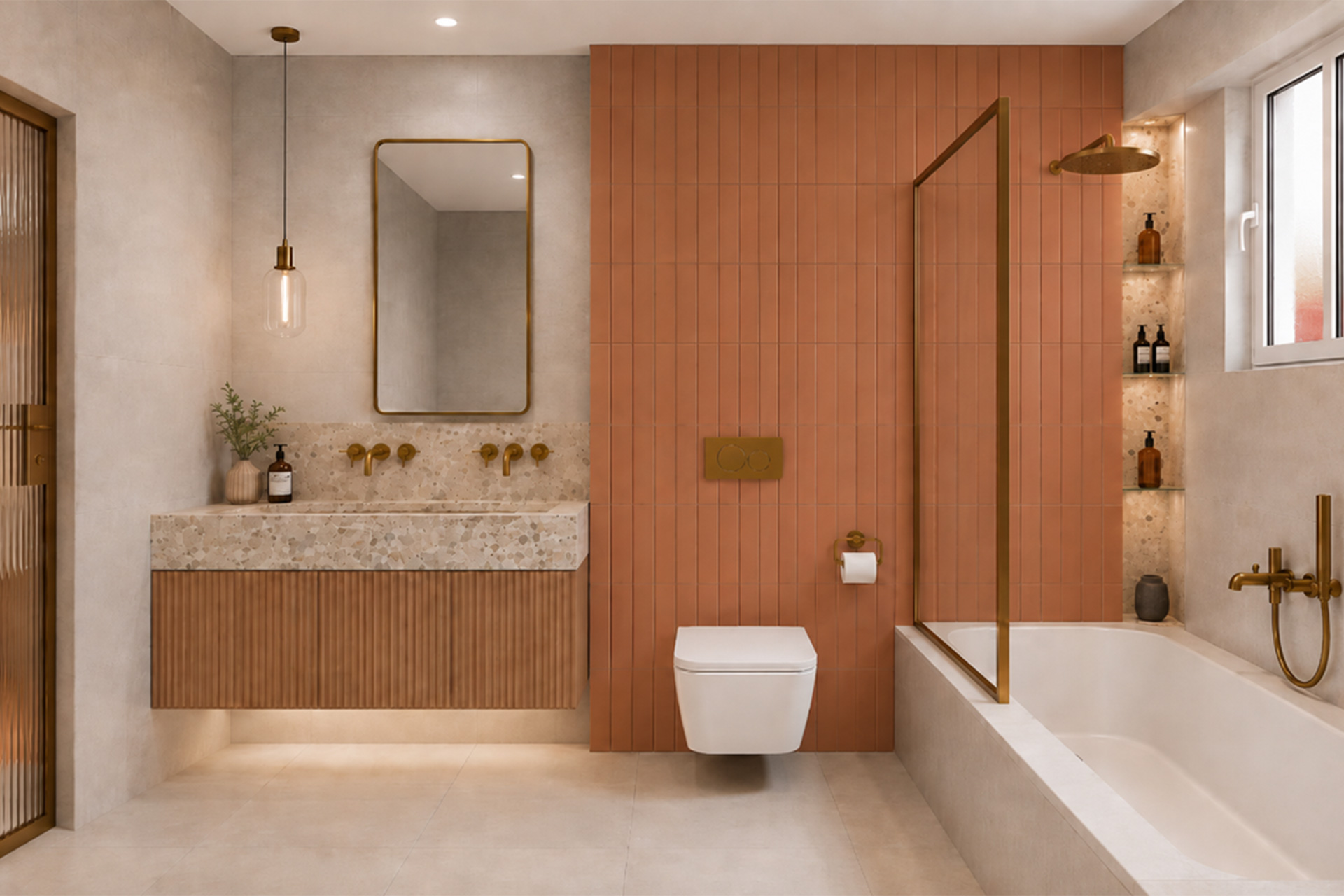
Terracotta, textured stone, and burnished brass create a bathroom environment shaped around warmth, ritual, and everyday wellbeing.
The STIRIXIS Residential Standard
At STIRIXIS Residential, this has always been the operating principle. Every private residence we design begins with one essential question: what does it feel like to live here? The answer shapes everything that follows, from spatial sequence to material selection, from the quality of silence in a bedroom to the warmth of a surface under daily use.
In a private residence in Athens, this thinking is expressed through warm minimalism, mid-century echoes, figured smoke oak, textured stone, terracotta, and burnished brass. The result is not decoration for effect, but an atmosphere designed around daily life.
Wellbeing as a residential standard is not a trend. It is a correction.
The market is aligning with what good residential design has always known: that the measure of a space is not what it communicates on first impression, but what it gives back across years of ordinary life. That is the standard worth designing for.
A beautiful residence is not enough if it does not support daily life. STIRIXIS Residential designs private homes where comfort, function, privacy, beauty, and long-term wellbeing work as one.
To begin a conversation about a private residence, contact advance@stirixis.com