

Why shared environments are becoming strategic assets for cities, institutions, and developments.
Common spaces are the squares, parks, waterfronts, civic buildings, transport nodes, campuses, cultural routes, institutional environments, mixed-use districts, and shared interiors people encounter every day. They are the places where a city, organisation, or development is not explained, but experienced.
For years, these spaces were treated as supporting environments. They connected buildings, hosted movement, provided access, greenery, circulation, waiting, or amenity. Today, their role is greater.
Common spaces shape how people feel, move, pause, gather, return, and relate to the wider location. They influence whether a place feels safe, welcome, clear, dignified, connected, or neglected. This is why they are no longer secondary assets. They are public value infrastructure.
Beyond Public Space
The conversation about public space is often limited to parks, squares, and streets. But the public experience of a place is wider. It includes the arrival hall of an airport, the entrance of a hospital, the courtyard of a school, the lobby of a civic building, the route through a cultural district, the edge of a waterfront, and the ground floor where private development meets public life.
These spaces may belong to different sectors, ownership models, and operational systems, but they share one responsibility: they shape the relationship between people and place.
The Fragmentation Problem
Many public-facing environments are still delivered as isolated interventions. A square is redesigned. A campus is expanded. A station is upgraded. A public building is renovated. A waterfront is activated. Each project may be technically correct, while the wider experience remains unresolved.
The issue is not always poor design. It is often the absence of shared strategic intent. Movement, identity, access, communication, programming, maintenance, commercial use, public life, and long-term governance are treated as separate tasks. The result is a place that may function, but does not fully perform. People may pass through it without understanding it, use it without caring for it, or recognise the investment without feeling the value.
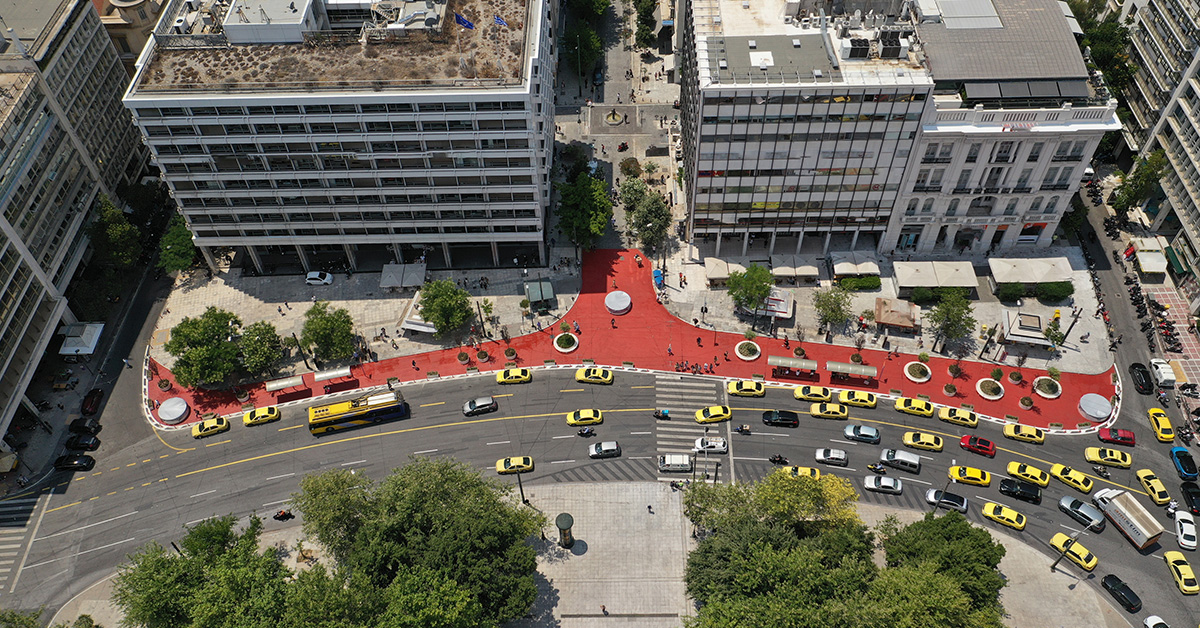
Syntagma Square in Athens: a reminder that common spaces must coordinate movement, access, public life and the wider urban experience.
The Public Value Shift
The strongest common spaces begin with a different question. Not only: what should be built here? But: what public value should this place create?
That question changes the brief. It asks who the place should serve, how it should be entered, used, maintained, remembered, and evolved. It also asks how the space can support the identity and value of the wider location.
A common space creates public value when five conditions work together: identity, so people understand what the place stands for; access, so people can move with ease; experience, so everyday interactions feel coherent and human; stewardship, so the place is cared for after delivery; and measurable value, so its contribution to community, reputation, wellbeing, footfall, resilience, and location value can be understood.
Common spaces are not leftover areas between buildings. They are strategic assets that shape trust, use, belonging, and the long-term value of place.
Common spaces are not leftover areas between buildings. They are strategic assets that shape trust, use, belonging, and the long-term value of place.
Location Gains Value
When a common space works, value does not remain inside its boundaries. The wider location benefits.
A well-orchestrated square can strengthen a district. A civic building can restore confidence in an institution. A campus can increase belonging and reputation. A transport hub can improve the first impression of a destination. A waterfront can shift how a city relates to itself.
For cities, institutions, public authorities, developers, and destination owners, this matters because value begins with human experience. When people feel welcome, oriented, safe, respected, and connected, they use a place more fully. Repeated use builds familiarity, trust, and attachment. Over time, that attachment strengthens the wider location — socially, civically, culturally, and economically.
From Space to Value
At STIRIXIS Group, we see common spaces as systems of public value. Their success depends on more than appearance. It depends on the coherence of every decision that shapes how people move, feel, gather, wait, understand, return, and care.
Through our Value Creation Circle™, Strategy, Design, Execution, and Evolution, we help public-sector and public-facing organisations move from isolated interventions to coherent environments that create value over time.
For common spaces, this means defining the role a place should play before shaping its experience, carrying that intent through design and execution, and ensuring it can be operated, maintained, activated, and evolved with purpose.
If you are shaping a public-facing environment, STIRIXIS Group can help define what role it should play, what experience it must create, and how it can evolve into lasting public value.
advance@stirixis.com