

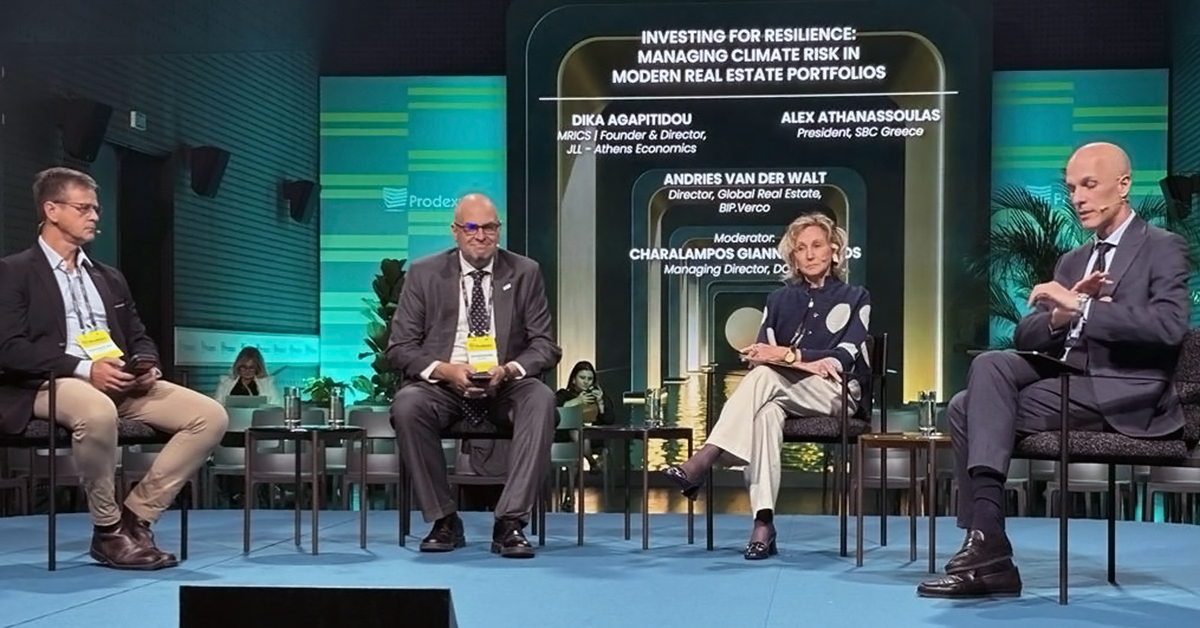
Climate risk, investment decisions and the long-term resilience of real estate assets took centre stage at Prodexpo 2026.
Alex Athanassoulas joined Prodexpo 2026 to discuss climate risk, investment resilience and the long-term performance of real estate assets.
At the 27th Prodexpo, held at the Athens Conservatoire, Alex Athanassoulas, President of SBC Greece, participated in the panel “Investing for Resilience: Managing Climate Risk in Modern Real Estate Portfolios” on 14 October 2026.
Athanassoulas began with a practical consequence of a warming climate: buildings are still being designed around conditions that have already changed. Rising demand for cooling illustrates the cost of that mismatch. When climate realities are overlooked at the outset, owners often pay later for mechanical systems intended to compensate for decisions that could have been made differently.
That makes the earliest project decisions commercially significant. Orientation, massing, shading, glazing and thermal performance affect both the amount of equipment a building requires and the energy it consumes throughout its life. Addressing these factors during feasibility and concept development can influence capital expenditure and operating costs long before a project reaches the certification stage.
“We are designing for a climate that no longer exists.”
He defined value in terms investors can test: the income a property earns, the yield applied to it at sale and its ability to secure insurance at a viable cost. As exposure to heat, flooding and fire increases, physical climate risk can affect all three. Insurability, in particular, is no longer a matter to consider only after a project is completed; it can influence financing terms and the asset’s attractiveness to future buyers.
He also cautioned against confusing certification with performance. Ratings, assessments and disclosures have a role, but they do not by themselves demonstrate how an asset will perform. The same long-term thinking applies to embodied carbon and the decision to refurbish or rebuild: retaining an existing structure may make environmental and financial sense, but that option must be evaluated at feasibility stage, before the project’s direction is fixed.
His recommendation was specific: include a physical climate-risk screening and a dated adaptation plan at feasibility stage, alongside the first cost plan. Owners should put that requirement in the brief, lenders should request it when financing is first considered, and public funding decisions should reflect it. The objective is not merely to document climate risk, but to make decisions early enough for an asset to remain resilient, insurable and investable over time.
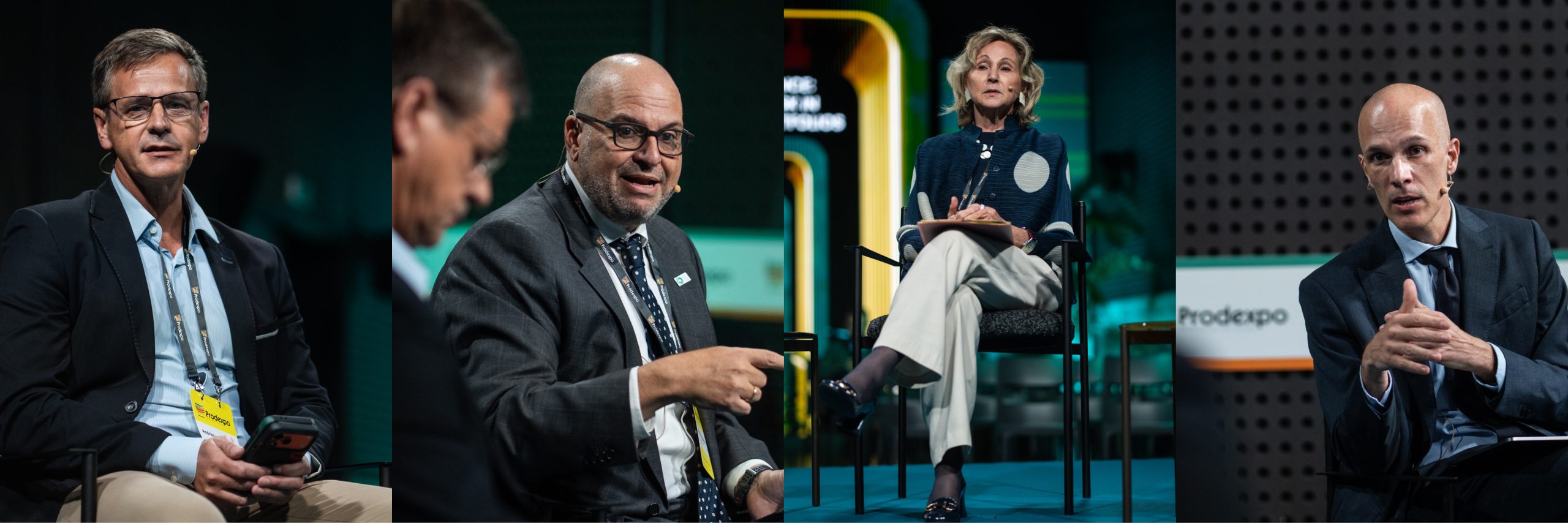
From left: Andries van der Walt, Director, Global Real Estate, BIP.Verco; Alex Athanassoulas, President, SBC Greece; Dika Agapitidou, MRICS, Founder & Director, JLL – Athens Economics; and moderator Charalampos Giannikopoulos, Managing Director, DCarbon. Photos: Courtesy of Prodexpo 2026.
Prodexpo 2026 took place on 14–15 October at the Athens Conservatoire, bringing together professionals from across the real estate sector.
Follow Alex Athanassoulas on LinkedIn