

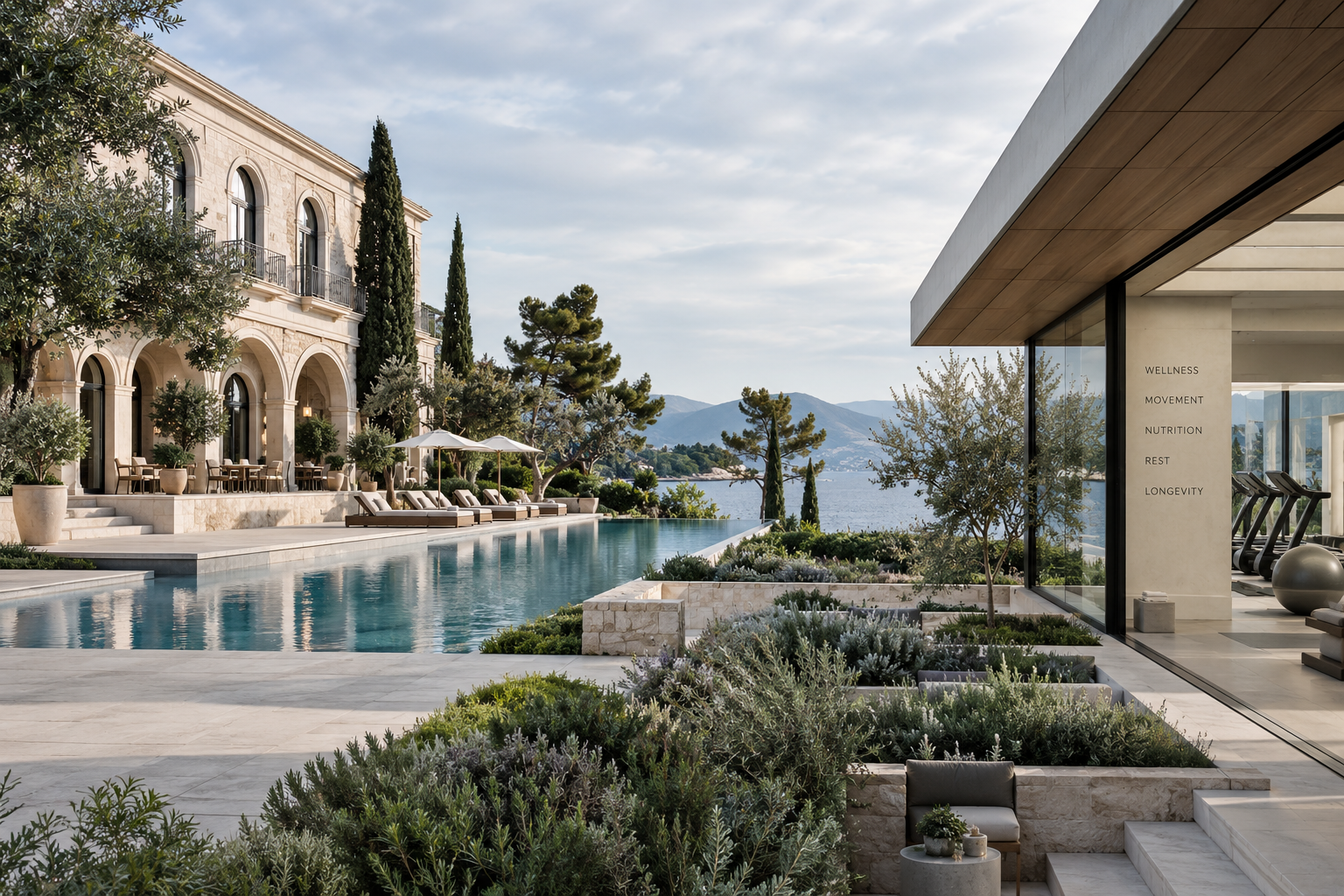
Before renovating an aging hospitality asset, there is a more important question: what should it become?
An aging hotel does not necessarily have a renovation problem. It may have a proposition problem. Owners often reach a familiar point in an asset’s lifecycle: rooms need upgrading, systems are becoming inefficient, guest expectations have moved forward, and competitors are offering something newer.
Instinct is understandable. Refurbish. Modernize. Reopen. But investing in a better version of the same asset assumes that its current use is still its best one. That assumption deserves to be tested first.
Start Before Design
Before deciding how an existing hospitality asset should change physically, owners need to understand where its future value could come from.
Has demand changed? Could the property serve different users? Can underperforming areas support new revenue-generating uses? Does its location create an opportunity that did not exist when it was built? Could hospitality combine with wellness, residences, work, culture or other complementary functions?
These are strategic questions before they become architectural ones. The opportunity is not simply to improve an existing product. It is to identify whether a stronger product is hiding inside the existing asset.
Read What Exists
Repositioning, however, cannot begin with market opportunities alone. Every existing building comes with conditions that determine what is realistically possible: structure, floor heights, circulation, MEP capacity, access, landscape, planning restrictions and operational requirements.
A compelling new concept can become an expensive mistake when the asset cannot support it efficiently. This changes the role of early assessment. Technical due diligence should not simply identify defects. Combined with commercial and strategic analysis, it can help determine which futures are actually viable before significant capital is committed.
The first investment decision is not how much to change. It is deciding what the asset is capable of becoming.
New Combinations of Value
Hospitality is already demonstrating how far this thinking can go. Wellness is moving beyond the traditional hotel spa toward more integrated hospitality models, while mixed-use developments combine accommodation with residences, F&B, leisure and other functions to diversify the proposition and its revenue base.
The opportunity, however, is broader than any single trend. The right future for one hotel may be wellness-led. Another may benefit from a residential component. Another could become a stronger destination by opening parts of the asset to its surrounding community. There is no universal formula because the value lies in finding the right combination for the specific asset, market and user.
Design for Evolution
Repositioning should also look beyond the next opening. Markets change. Guest behaviours change. Operating models change. Technologies and regulations change. An asset designed too tightly around today’s proposition can become tomorrow’s repositioning problem.
Long-term value therefore depends partly on adaptability: creating spaces, systems and operating structures capable of accommodating change without requiring another fundamental reinvention. That moves the conversation from renovation toward asset evolution.
A Different Starting Point
The most valuable intervention may still be a refurbishment. It may also be a change of use, a hybrid model, a different customer proposition, or an entirely reconsidered business model.
The answer should come after the asset has been understood strategically, commercially, technically and operationally. Because before investing in what a building looks like next, there is a more consequential decision to make: What should this asset do next?
Considering the next stage of an existing hospitality asset? STIRIXIS Group brings strategy, design, execution and evolution together to identify opportunities for long-term value before capital decisions become physical ones.